Templates
Industry-aware starting points for restaurants, cafes, barbers, gyms, medical offices, and real estate teams.
SiteForge pairs polished template previews with managed-hosting evidence, portal operations, and safe staging checks before any public launch decision.
A compact bento overview keeps the high-value workflow visible without introducing billing, ordering, or full client-builder launch paths.
Industry-aware starting points for restaurants, cafes, barbers, gyms, medical offices, and real estate teams.
Staging-safe hosting workflows with evidence capture before production decisions.
Static output remains guarded by validation and export checks.
DNS and SSL stay manual/evidence-gated until explicitly approved.
Portal profile updates stay scoped to the selected business workspace.
Public previews stay separated from production launch approval.
Menu, hosting, custom domains, kitchen, and reports remain behind portal context.
The workflow cards stay readable during normal scrolling and flatten automatically for reduced-motion users and compact screens.
Start from public-safe template previews that preserve the approved variant registry and legacy Jade Wok behavior.
Open local-demo workspaces for business profile, menu, hosting, and portal checks without exposing production client-builder flows.
Capture static output, managed hosting, staging smoke, and owner-approval evidence before any public SaaS launch decision.
The homepage now follows the approved warm parchment, onyx, and forge-amber direction while keeping commercial claims grounded in the current demo and staging-safe system.
Cloudflare staging, static output, custom-domain setup, and owner approval remain separate checkpoints before any launch decision.
Menu, business profile, hosting, custom domains, kitchen preview, and reports stay inside portal context with production workflows blocked.
Demo reporting surfaces show the intended workflow shape without claiming live revenue, order, or payment analytics.
Every website you create includes SEO-ready metadata, social sharing previews, sitemap support, image alt text, and local business structured data to help search engines understand your business.
Restaurant websites can automatically include menu, address, phone, hours, Google Maps link, and Restaurant structured data when available.
SEO setup helps search engines understand your site, but rankings are not guaranteed.
Templates are lightweight local demo metadata today. Production generation, deployment, and marketplace publishing are intentionally separate future phases.
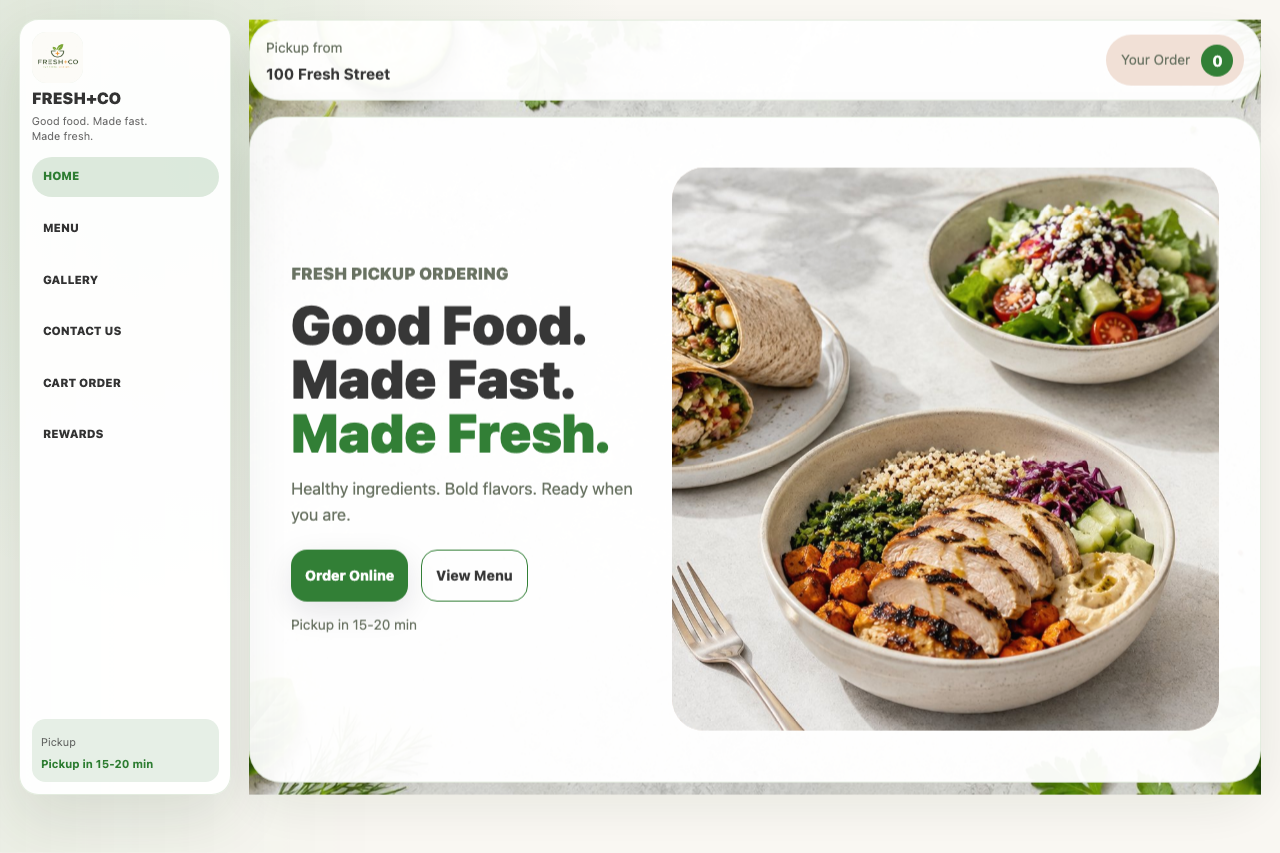
Order-first restaurant layout for bowls, wraps, burgers, and high-volume takeout.
menu + kitchen + reports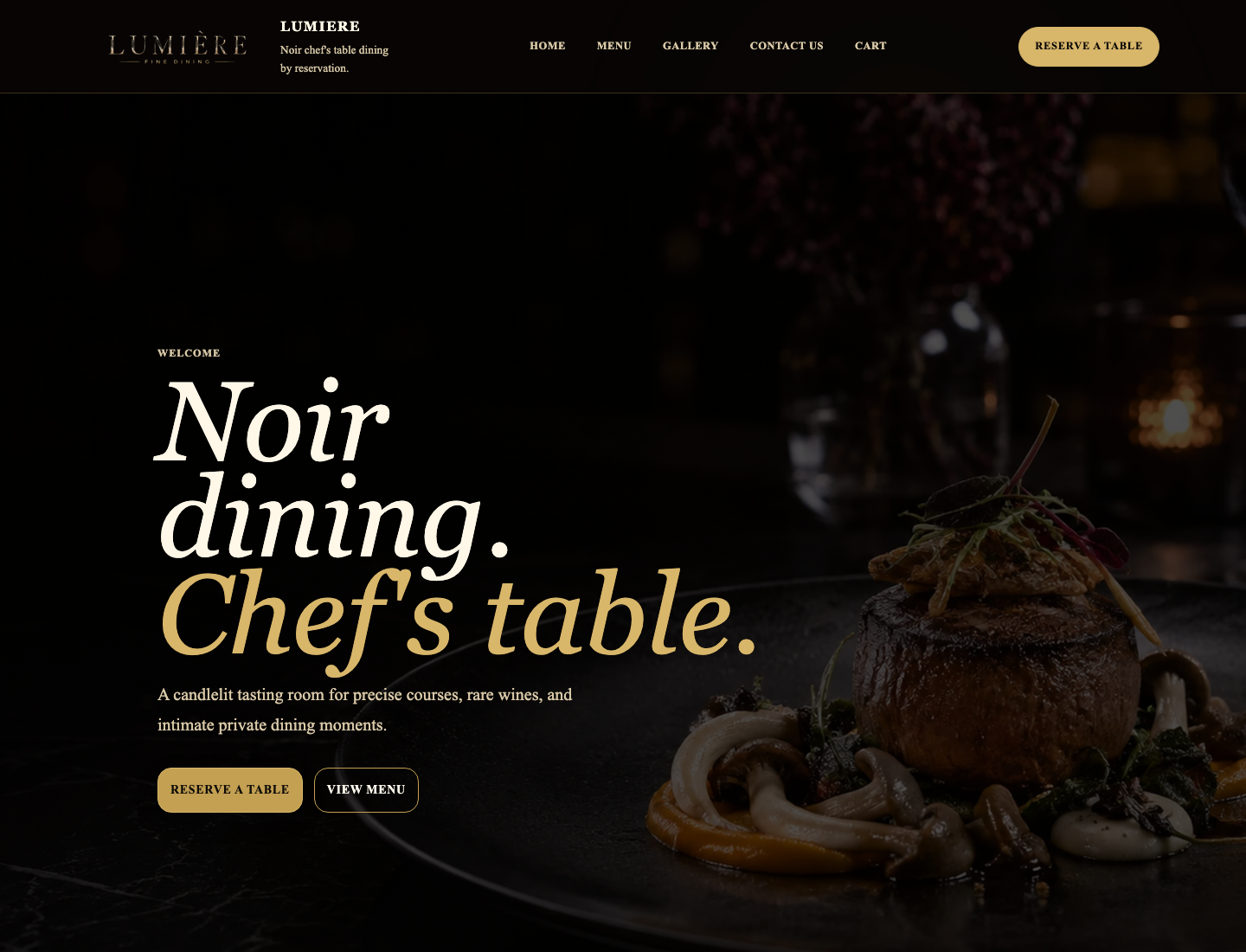
Cinematic reservation-first template for upscale dining rooms, lounges, and tasting menus.
menu + kitchen + reports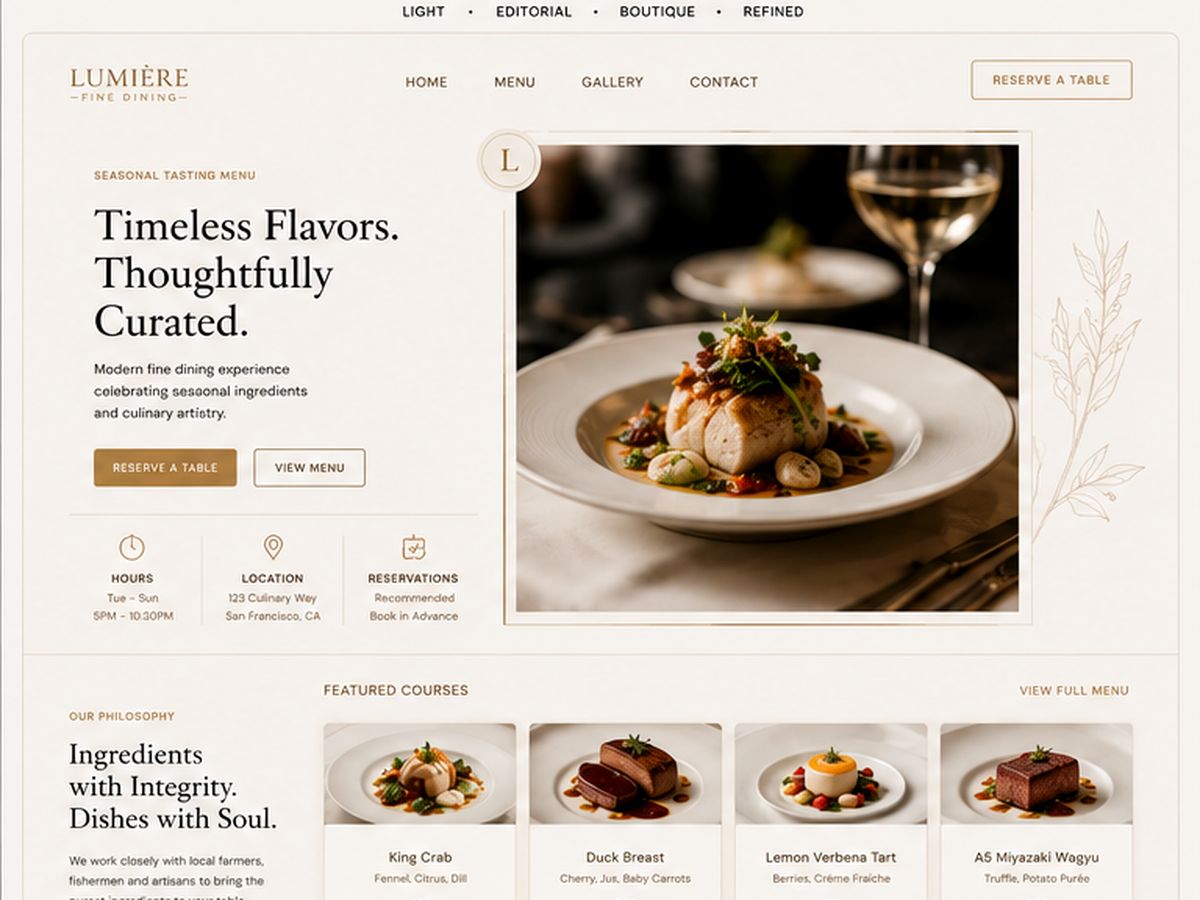
Light editorial tasting-menu template with a split hero, champagne surfaces, and refined salon pacing.
menu + kitchen + reportsRestaurant templateOrder-first restaurant layout for bowls, wraps, burgers, and high-volume takeout.
RestaurantModern Fast CasualOrder-first restaurant layout for bowls, wraps, burgers, and high-volume takeout.
menu + kitchen + reportsPlaceholder pricing only. No billing, Stripe, subscriptions, payment collection, production ordering, or production checkout is connected.
For single local business previews once billing is separately approved.
Demo placeholderFor active portal demos that need menu admin, kitchen preview, and reporting surfaces.
Demo placeholderFor platform teams managing multiple client projects and support workflows.
Demo placeholderTemplates are local demo metadata today, used to create lightweight business shells.
Platform admins can browse businesses, create demo businesses, and assign local demo users.
The menu admin supports local demo category and item management before production storage is connected.
Local demo orders can flow from cart checkout into Kitchen and Reports without payment or backend claims.
Deployment is intentionally pending. Export and preview flows still work for local validation.
Future integrations should be added only after production auth, storage, billing, and deployment contracts are defined.